
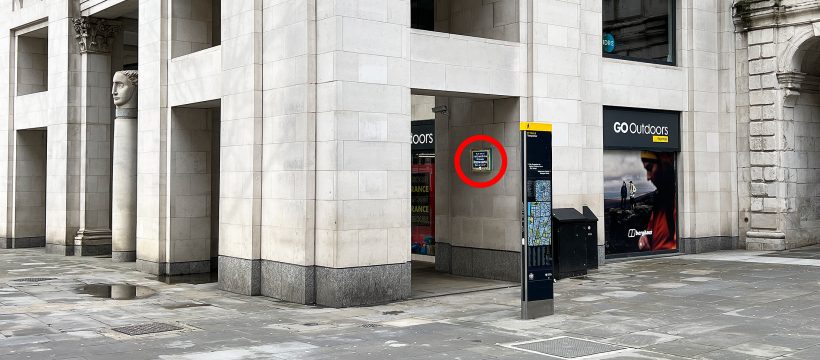
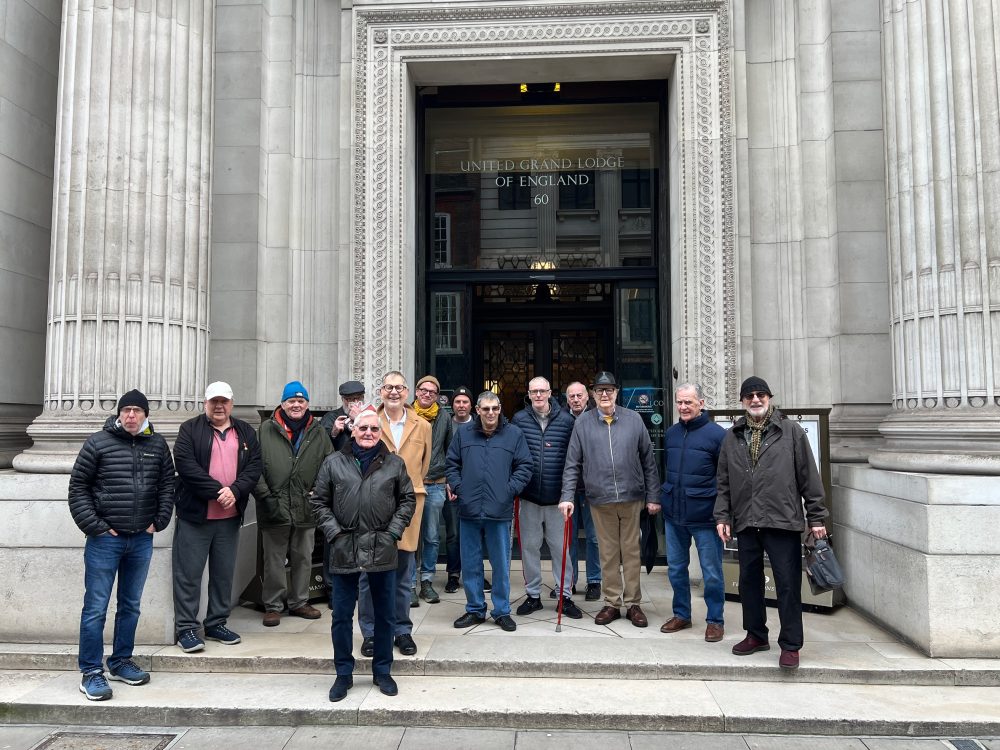
On the 20th January a group of the Geezers visited the Freemason’s Hall for a fascinating guided tour of their museum. It’s at 60 Great Queen Street, near Holborn tube. It’s open Tuesday – Saturday 10-5, admission free.
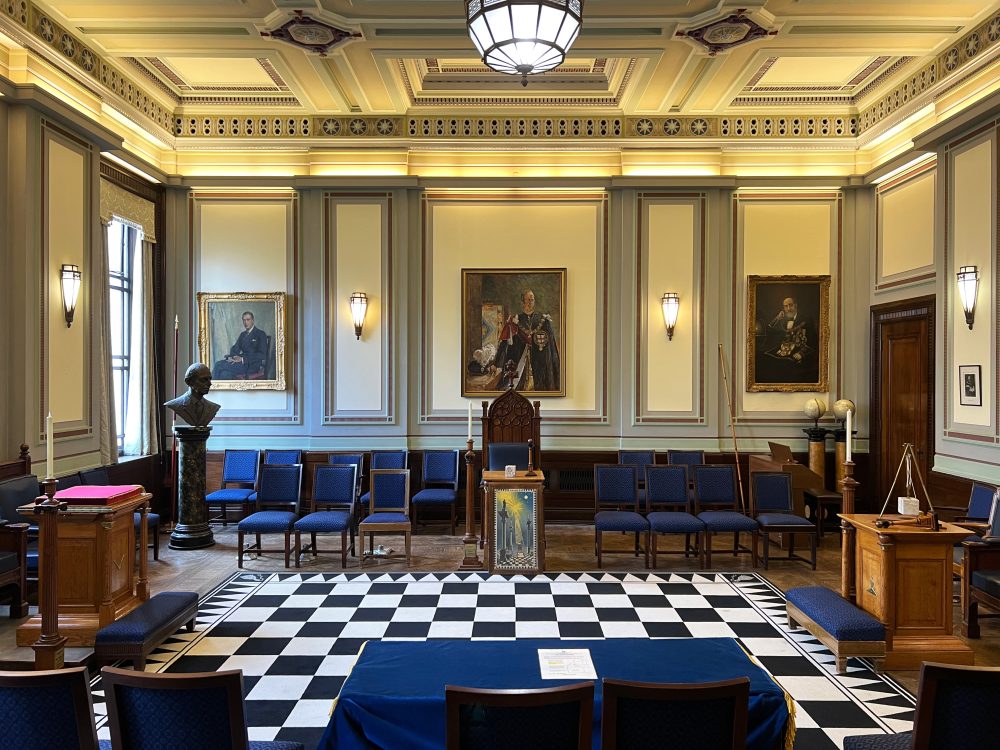
A background to Freemasonry
The first Free Masons were English stone masons, building things like cathedrals. They wore protective leather aprons. When the job was finished, in order to be able to move outside the area to the next job, they had to prove that they were competent, experienced and trustworthy. This was about 700 years ago. The Free bit means that they were free to work elsewhere.
The Regius Poem was written about 1390, and sets out rules for stonemasons. The poem claims that masonry goes back to Euclid in Egypt around 300 BC and arrived in England under our first King, Athelstan (927 – 939).
It contains rules governing the professional and moral conduct of Masters, including:
- Masters must be trustworthy and not favor unqualified workers.
- Apprentices must be taken for a minimum of seven years.
- Work should not be taken that cannot be finished properly.
- Masters must not supplant (take/steal work from) fellow masons.
The rules for Craftsmen cover behavior and ethics, including:
- Masons must love God, the Holy Church, and their fellows
- Labor must be diligent
- Secrets of the lodge must be kept.
- Workers must not cause conflict
- Masons must not mistreat or seduce the wives/daughters of their fellows.
The rules from 1390 are very much applicable today. The first bullet point for Craftsmen now allows for other religions by using the phrase: “…belief in a Supreme Being…”
Once a stonemason had joined the local craft guild they were issued with secret code words, hand gestures and other signals. Now they could turn up miles from home and get work.
Over the centuries the membership expanded to include other professions and intellectuals.
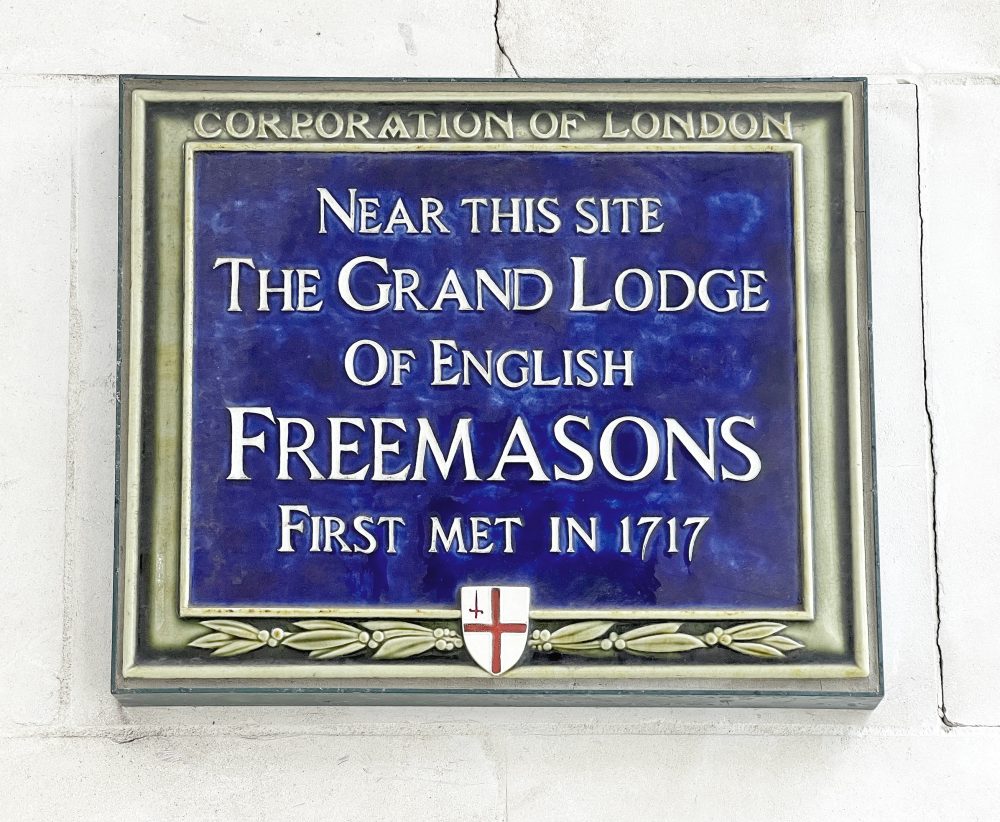
1717 The Grand Lodge of English Freemasons
On 24th June 1717, four London lodges met at the Goose and Gridiron tavern in St Paul’s Church Yard to create the central governing body, today called the Premier Grand Lodge of England. They’d each been meeting in different taverns, the Goose and Gridiron, being one. In 1725 the minutes of the Grand Lodge listed lodges all around the country: Bath, Bristol, Norwich, Chichester, Chester, Reading, Gosport, Carmarthen, Salford, and Warwick.
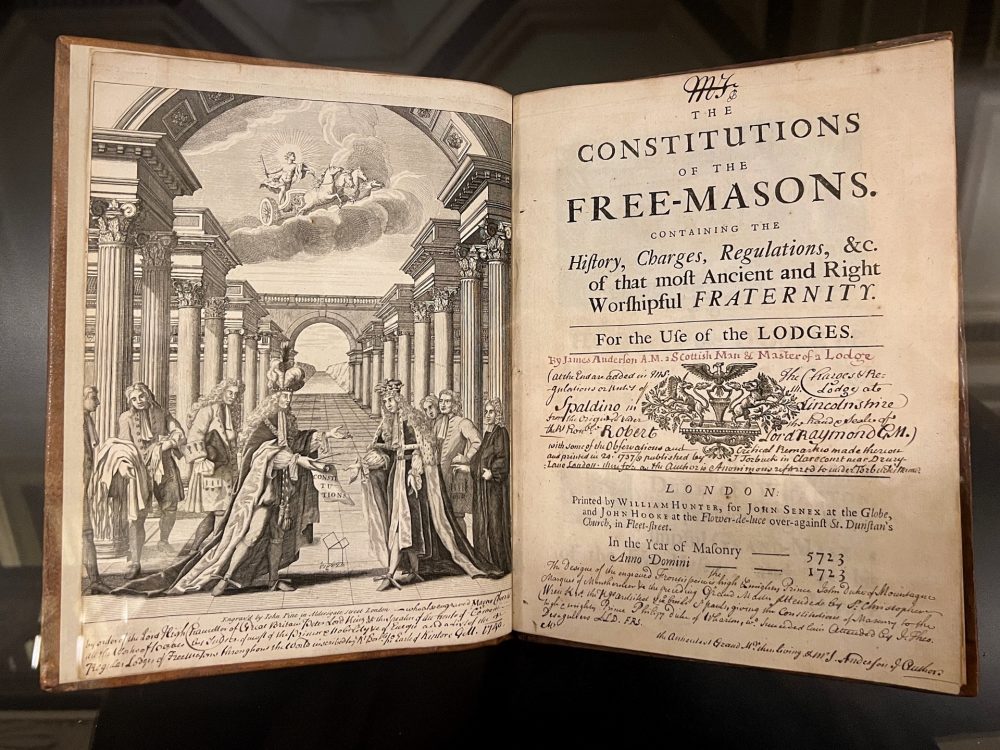
In 1723 the rule book above was published. I photographed this in the Freemasons Museum, London.
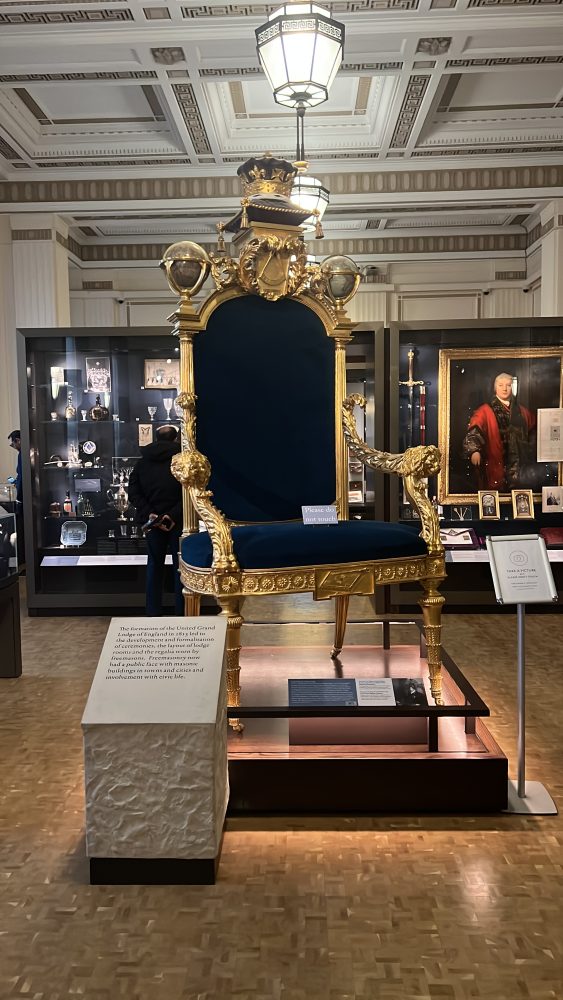
The 1717 formation of the Central Governing Body was followed by a century of the appearance of rival groups, lodges and disputes! In 1813 Queen Victoria’s father, Prince Edward Duke of Kent and Strathearn, knocked heads together to consolidate them all into the United Grand Lodge of England.
In the century that followed the British Empire rapidly expanded due to steamships and the telegraph. From 1866 undersea cables could transmit messages at 8 words a minute across the Atlantic. They revolutionised trade, enabled real-time trading, speeded up diplomacy, and allowed Victorian Britain to keep a tight control over its Empire. Alongside this came the worldwide expansion of Freemasonry.
Aprons
The apron symbolises honourable labour, purity, and a reminder to keep one’s conscience clean.
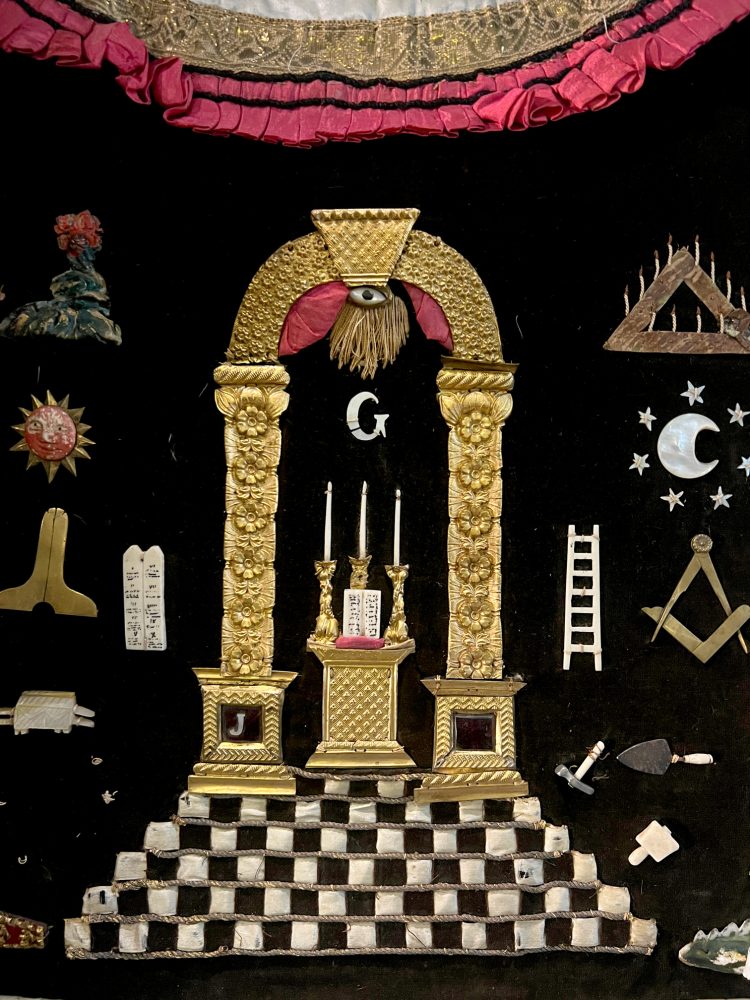
It’s on display in the Museum of Freemasonry
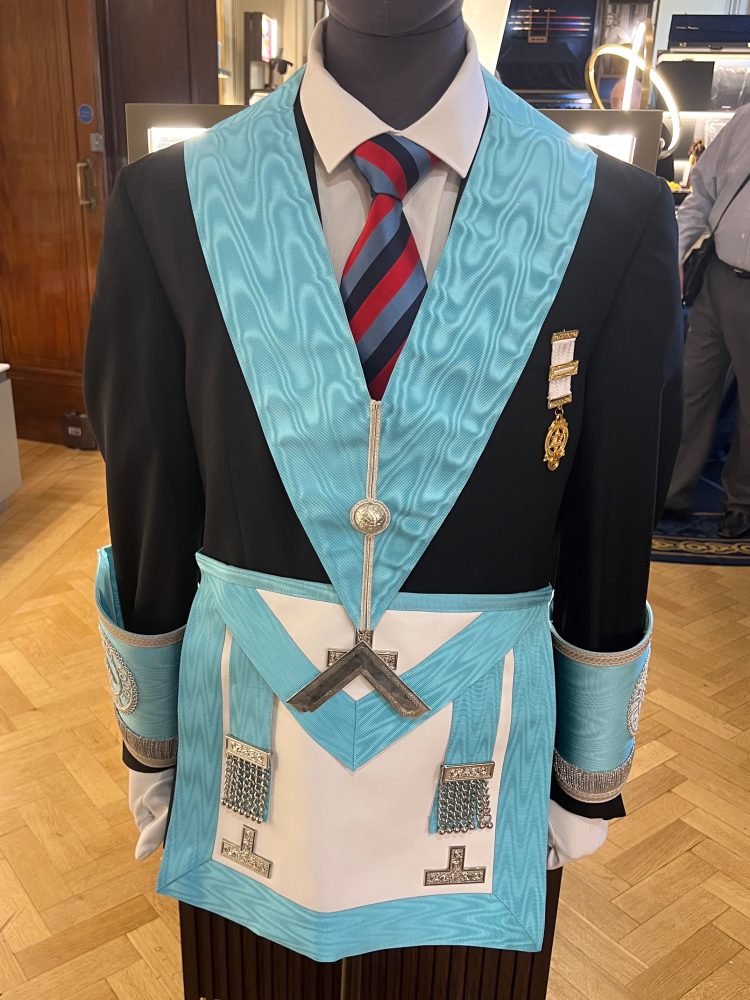
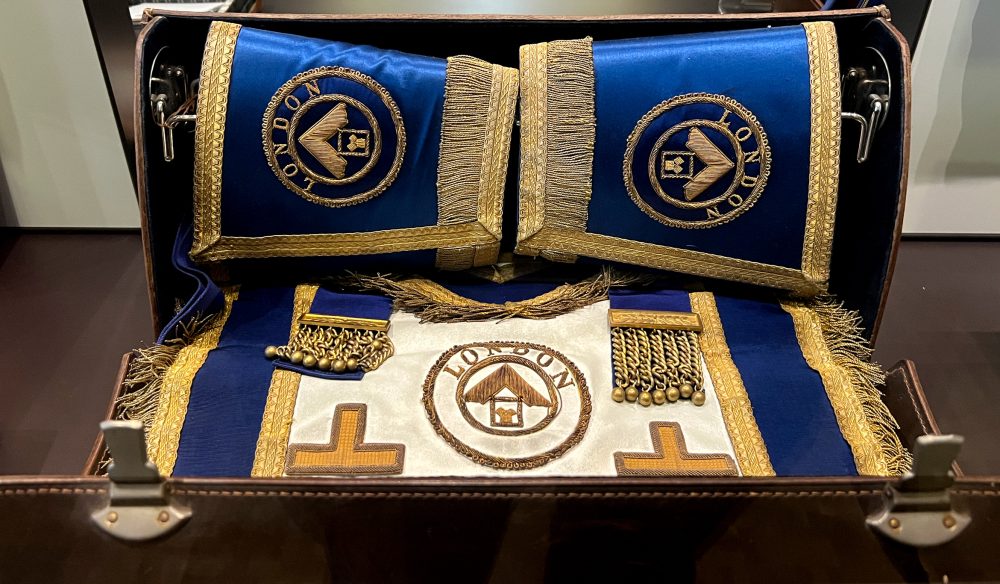
The 3 Degrees
Today “Entered Apprentices” – new recruits, are provided with a simple white apron. It usually takes 6 – 12 months for them to work through the three degrees: Entered Apprentice, Fellowcraft, and Master Mason.
The Entered Apprentice is taught that although we are all born equal, some people do better than others and though charity they should look after the less fortunate.
Fellow Craft is about improving yourself as a person.
The Master Mason uses his time-limited life wisely.
The next step for a Master Mason is to join the Holy Royal Arch. These meet in Chapters, rather than Lodges and it emphasizes the spiritual, focusing on the relationship with God.
English Freemasonry Today
Freemasonry operates as a charitable, philanthropic, and social organisation for men (with separate female lodges). It’s principles are Integrity, Friendship, Respect and Service. Lodges engage with their local communities and fundraise for charities.
Charity
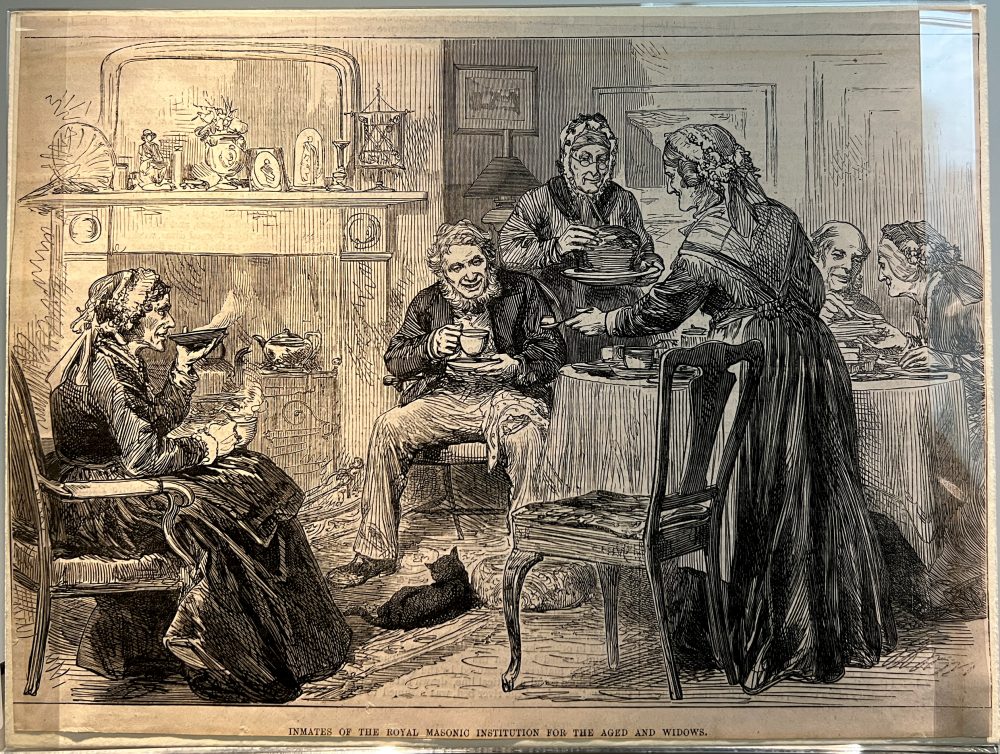
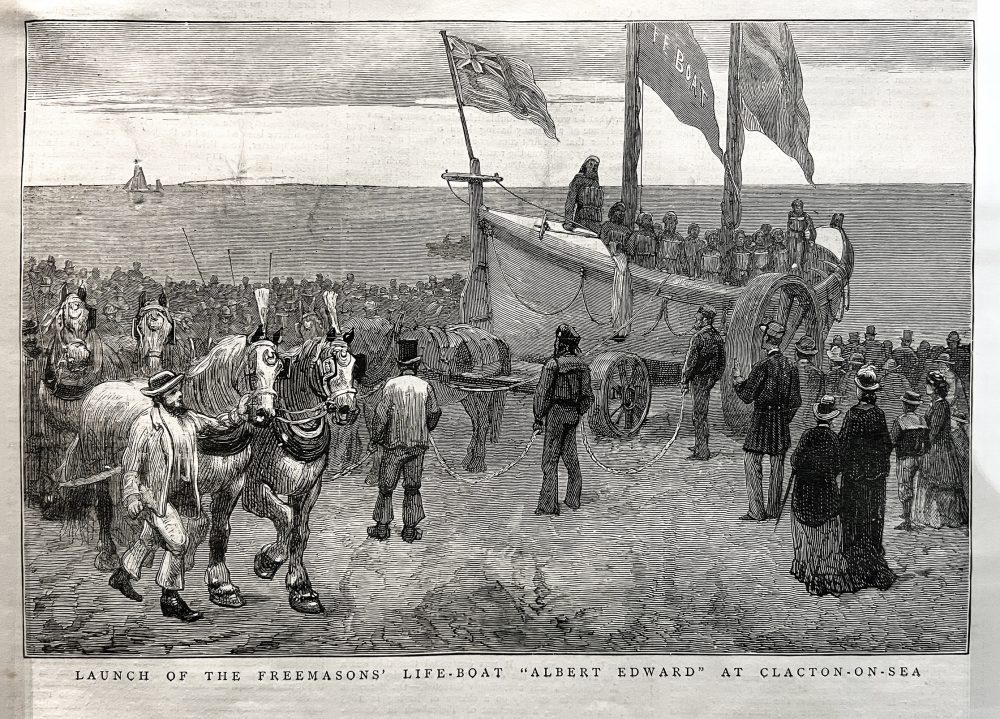
Following the Grenfell Tower fire in 2017 members of the Metropolitan Grand Lodge, ran a successful two-year campaign to raise the £2.5 million needed to design, develop and deploy two super-aerial, extended-reach 210-foot turntable ladders – double the size of anything in the fleet.
As long-term supporters of London’s Air Ambulance Charity the London Freemasons raised two fifths of the money to buy two new helicopters in 2023.
I can highly recommend a visit to the Museum of Freemasonry. It has a nice cafe inside. It also houses a research library, which might enable you to discover your family’s history.
Alan Tucker